Already a member? Click here to Login


Safety Notice: Handmade items made from this pattern may contain small parts or long cords that pose choking or strangulation risks. Not suitable for children under 3 years. Please see the full safety disclaimer at sewmag.co.uk/safety.
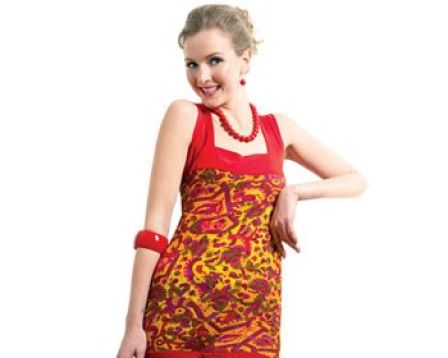
Tunic top
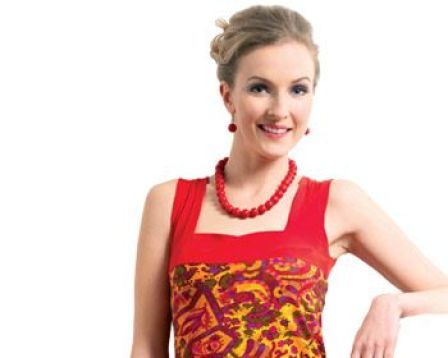
Create the square neckline template. To visualise the shape of the neckline, stand in front of a mirror and place a sheet of A4 horizontally on to your chest, this will help you to see the position and placement of the neck. Stick paper either side of the horizontal sheet to create the side sections of the neck. Snip the paper so that your neck fits comfortably through the gap and that the side pieces meet the tip of your shoulders.
Check the fit. Fold the paper so that it sits back over your shoulders allowing your hands to be free to mark out the desired neckline, armholes and shoulders. Pin the templates over your clothes and check from all angles to ensure that you are happy with the fit. Remove the template and neaten any lines.
Complete the neckline template. Taper the shoulder seam lines gently to match the shoulder slopes – you don’t want it to be a 90degree angle or it will not sit comfortably and will slip about. To ensure pattern symmetry, fold the paper in half when you are cutting the armholes and tapering the shoulders. Pin it onto your clothes to check, marking the paper and trimming your pattern. Imagine there is a line running down your underarm to your hips. This is the point your side seams end. Fold the paper accordingly and trim. Keep having a look at how the yoke sits on your body when it’s pinned in place.
Adjust the front yoke, and make shaping adjustments. The bust line shape slopes down either side towards the underarms and it needs to be levelled on the body. Mark the pattern piece with ‘Yoke Front, Cut two’. This section is self lined, so one will be the outer section and the other will become the lining.
Make the second pattern piece. Begin to plot out the back yoke. Duplicate the Yoke Front pattern piece onto a new sheet of paper by drawing around it, but this time, link the two top shoulder corner points with a gentle arc to follow the contour of the back neckline, this will be much higher than the square edge of the front of the garment.
Adjust the back yoke. This section is a slightly different shape to the front as there is no bust contour. This section needs to be shortened, do this by folding up the paper from the bottom of the one armhole to the other armhole, and then cut it off. Mark this pattern piece, ‘Back Yoke, Cut two’. This section is self lined, so one will be the outer section and the other will become the lining.
Create the front and back pattern pieces. Attach the front yoke pattern piece onto yourself by carefully pinning it to your clothes. Take a sheet of newspaper and holding that up to yourself, work out what sort of shape, size and length top you want by folding the sides and lower edges until you are happy with the style. The basic shape should look like a rectangle with a slight taper out towards the bottom, and the top measurement should be the same width as the yoke. If you have enough fabric, you may decide to take the top longer to turn it into a dress, do this now by extending the sheet to your desired length. Mark the newspaper pattern piece ‘Body, Cut two’
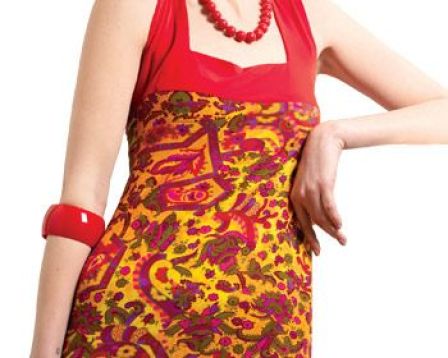
Create the lower hem section. Measure the bottom of the top to give determine the width, then decide on the panel’s depth. The sample here is 20cm deep, but you can make this larger or smaller as desired. This panel is folded in half when finished giving the panel a finished depth of 10cm. Mark the pattern piece ‘Hem Panel, Cut one on fold’.
Add in the seam allowance. The four pattern pieces you have created do not have any seam allowance. This is done after you have pinned them into position on your fabric, but before you cut them. Once you have aligned each one on the material you will need to draw a 1.5cm border around each piece using tailor’s chalk.
Cut the pieces from the fabrics. On to the contrasting fabric, cut the Front Yoke, Back Yoke and the Hem Panel (ensuring you have added all the seam allowances). Cut the Body pieces from the contrasting fabric, ensuring that you add the seam allowance before cutting.
Assemble the yoke. With right sides facing align a front and back yoke section and join together along the shoulder seams with a machine stitch. Repeat with the second set of yoke pieces. Place the two complete yokes together with wrong sides outermost. Stitch around the square of the neckline, snip the fabric at the corners to reduce bulk.

 Sign in with Facebook
 Sign in with Google